Help insects overwinter in your garden
In summer, your garden hums and flutters with life. But as soon as it gets colder, everyone seems to have suddenly disappeared. Yet they are still there. Many insects simply spend the winter in your garden, hidden in hollow stems, under leaves, in crevices or in the soil. With a few small choices, you help them through the winter. And the best part is: that often means less work. Who said a little laziness in the garden was a bad idea?
How do insects actually overwinter?
Insects cannot keep their bodies warm like we do. So they need a clever solution. Every species approaches it in its own way.
- Solitary bees, such as the mason bee, usually overwinter as larvae or pupae in their nest tunnels. In spring, they gnaw their way out.
- Bumblebees: only the young, mated queens survive the winter. They crawl into the ground, under moss or into a leaf pile. The rest of the colony dies in autumn.
- Ladybirds overwinter as adult beetles, often in groups. They hide in crevices, under bark, between dry leaves or in hollow stems.
- Butterflies: most species survive the winter as eggs, caterpillars or pupae. A few species overwinter as butterflies. The red admiral simply hangs outside among ivy or holly. The peacock butterfly sometimes seeks out a cool shed or attic.
- Lacewings overwinter as adult insects, in a cool, sheltered place. Sometimes you will come across them in winter in a shed or among the curtains.
Don't tidy up everything
The most important tip is also the easiest: don't leave the garden too tidy in autumn. A tidy garden is an empty garden for insects.
- Hollow and sturdy stems of perennial plants should be left standing until spring. Larvae and beetles overwinter in them. If you cut them off in spring, leave them on a pile for a while so the residents can get out.
- Leaves on the borders should be left. Under the leaves, it is damp and a few degrees warmer than above.
- A branch pile or woodpile in a quiet corner is a palace for beetles, spiders and woodlice. And for the hedgehog that likes to move in.
- Bare patches of soil are welcome for ground bees, which nest in the soil.
The neighbor may look suspiciously over the hedge. Then just explain to him that you don't have a mess, but an insect hotel with a garden view.
An insect hotel in the right place
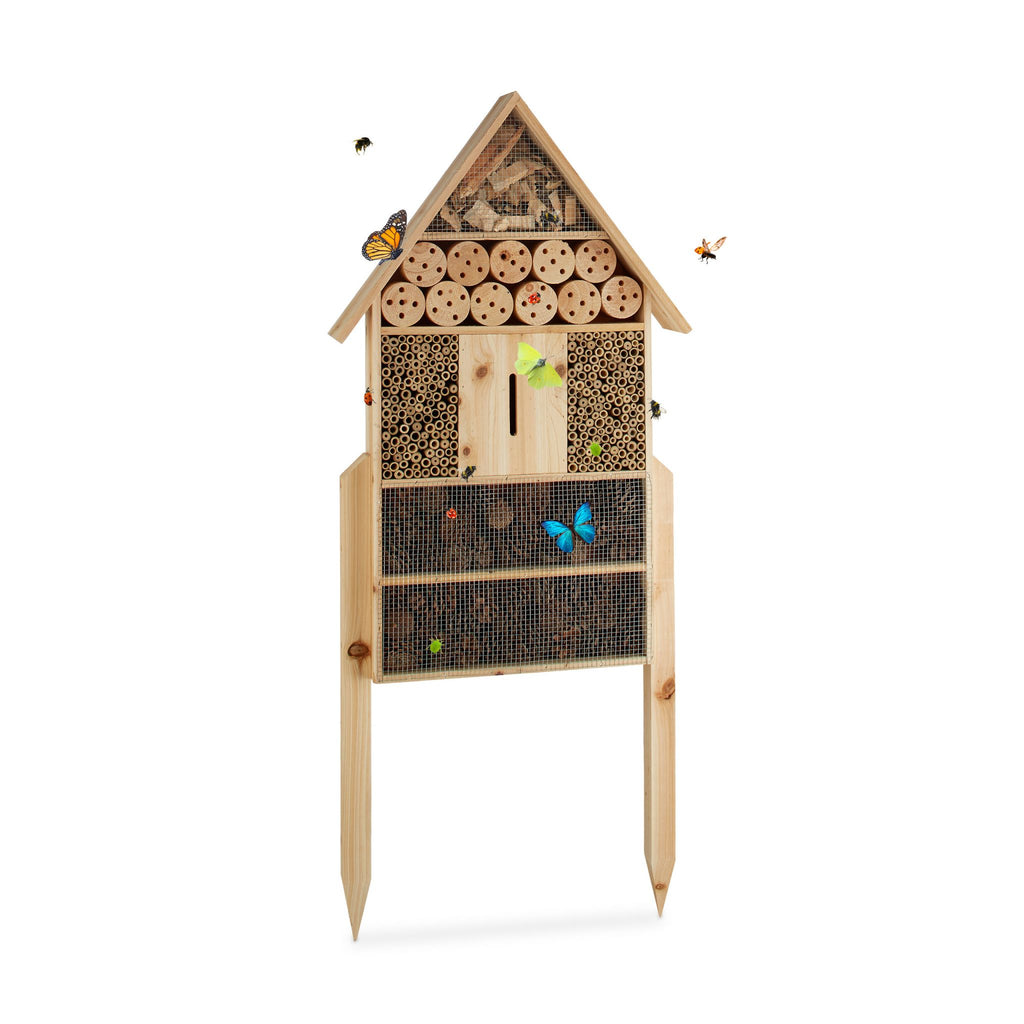
An insect hotel is a nice addition to a natural garden. Solitary bees especially like to make use of it. The location does matter.
- Hang or place the hotel in a sunny spot, preferably facing south or southeast.
- Make sure it is securely attached and does not sway back and forth in the wind.
- Choose a spot where it stays dry, for example under an eaves or with its own little roof.
- Just leave the hotel outside in winter. The residents need the cold to wake up at the right time. In a warm shed, they will emerge too early.
Preferably choose a hotel with smooth, finished holes of different sizes. Bees cannot damage their wings on them. There are also special shelters for bumblebees and butterflies. View the options for bees and bumblebees and butterflies and ladybirds.
Plants that help insects in winter
You can also help insects with your planting. Evergreen plants such as ivy and holly offer shelter in winter. Ivy also blooms late in the year and is one of the last nectar sources in autumn.
Also think ahead to spring. Insects that survive the winter need food immediately in February and March. Early bloomers such as crocuses, snowdrops, willow and blackthorn are a welcome first meal. Planting flower bulbs in autumn? Then you are doing the first bumblebee queens of the year a great favor.
What you had better not do
- Do not use pesticides. They also affect beneficial insects, and the rest of the soil life.
- Do not clean the insect hotel in winter and do not remove the tubes. There are still residents in them.
- Find a dormant insect in your shed? Leave it be. Waking up costs the insect a lot of energy.
- Better not just put a dormant butterfly you find indoors outside in the frost. Bring it to a cool, dry place, such as a shed or garage.
You don't make a garden full of life in a weekend. But with every stem you leave standing and every leaf pile you leave lying, you are helping a little. This way, your garden becomes a little richer every year in bees, butterflies and beetles. You can find more inspiration in our insect collection.
-
Posted in
biodiversiteit, insecten, insectenhotel, natuurlijke tuin, overwinteren