Using your greenhouse in winter
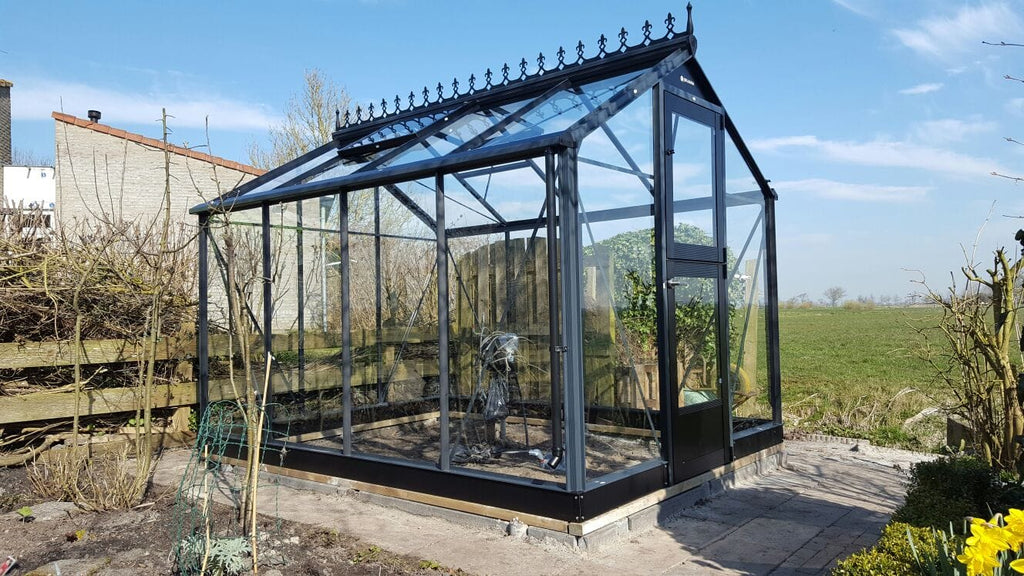
The tomatoes have been harvested, the cucumbers are finished, and your greenhouse looks a bit deserted. That's a shame, because your greenhouse can still be very useful in winter. As a sheltered spot for potted plants, a winter kitchen for lettuce and spinach, or a sheltered workspace where you can sow your first seeds in February. While it rains outside and the slugs make their rounds over your patio. That's how you get the best out of your greenhouse in winter.
First, a thorough clean-up
Start by tidying up. Remove old plants, pots and plant debris from the greenhouse. Fungi, aphids and other pests like to overwinter there. Healthy plant debris can go on the compost heap, but diseased remains are better off with the green waste.
Then clean the glass, inside and out. In winter light is scarce, and dirty glass blocks a lot of it. Use lukewarm water with mild soap and a soft brush or sponge. Don't forget the corners and the profiles, as algae and dirt collect there.
- Check if any panes are loose or damaged.
- Check if the door and the roof vents close properly.
- Empty the gutter so that rainwater can drain away properly.
- Sweep the floor and the growing tables.
What can you grow in the greenhouse in winter?
An unheated greenhouse is no tropical paradise in winter. It can freeze in there too. But the greenhouse keeps out the wind and rain and is often a lot warmer during the day than outside. This allows you to keep winter-hardy vegetables growing for longer.
- Lamb's lettuce: a real winter champion. Sown in late summer or early autumn, you can harvest it throughout the winter.
- Winter purslane: fresh, mild and very cold-resistant.
- Spinach and chard: grow slowly in winter, but you can regularly pick some leaves.
- Rocket and other peppery leaves: perfectly suited for a spot in the greenhouse.
- Herbs: parsley, chives and thyme in pots often last longer in the greenhouse.
If you are still sowing something now, keep in mind that things will go slowly due to the little light. That's normal. Don't water too much, because little evaporates in the cold. It's best to water in the morning, so the plants have had a chance to dry out again overnight. A growing table or shelf keeps pots and trays a bit higher up, in a brighter spot. Take a look at the greenhouse accessories and the growing tables.
Overwintering potted plants
Many gardeners use the greenhouse in winter as shelter for potted plants. Think of olive, laurel, oleander or citrus. Do keep in mind: an unheated greenhouse is not frost-free. In severe frost, it can freeze quite badly inside too.
- Plants that can tolerate a little frost, such as olive and laurel, are usually well protected in an unheated greenhouse.
- Sensitive plants such as citrus often need a frost-free spot. In that case, you will need some form of heating, or you should put them in a cool, bright place inside your home.
- Place pots on a shelf or on feet, not directly on the cold ground.
- Water potted plants sparingly in winter. Roots that are too wet in the cold will rot faster than roots that are too dry.
Hang a thermometer in your greenhouse, preferably a min-max thermometer. Then you will know exactly how cold it got overnight. You will find various models among the outdoor thermometers.
Insulating and ventilating
Want to keep the greenhouse a little warmer? Then you can line the inside of the glass with bubble wrap. This retains some of the heat, but still lets enough light through. Do leave the roof vents free. On cold nights, you can also cover sensitive plants with an extra layer of fleece.
Insulating is good, but ventilating is just as important. A closed greenhouse quickly becomes damp, and dampness is exactly what fungi are waiting for. On sunny, dry days, open the door or a roof vent for a while. Close it again in the evening so that the daytime heat stays inside.
Snow, storms and preparing for spring
Is there a thick layer of snow? Then carefully clear the roof with a soft broom. A thick layer of wet snow is heavy and also blocks all the light. After a storm, check that everything is still intact. It's better to secure a loose pane immediately before the wind carries it into the neighbour's garden.
And then, from late January, you'll start to get that itch again. In the greenhouse, you can then start the first seedlings, such as tomatoes, peppers and lettuce. You will find seed trays and other growing materials among the growing supplies. Still dreaming of your own greenhouse, or a larger one? Take your time in winter to look at the greenhouses and think about what will suit your garden. That way, your greenhouse will be full of life all year round.
-
Posted in
kweken, moestuin, overwinteren, tuinkas, winter